Paint Correction
Car Paint Restoration: What Works and What It Costs
November 22, 2026 · 13 min read
How car paint restoration works, how to tell faded paint from failed clear coat, what correction costs in Allen, TX, and how to keep the shine afterward.
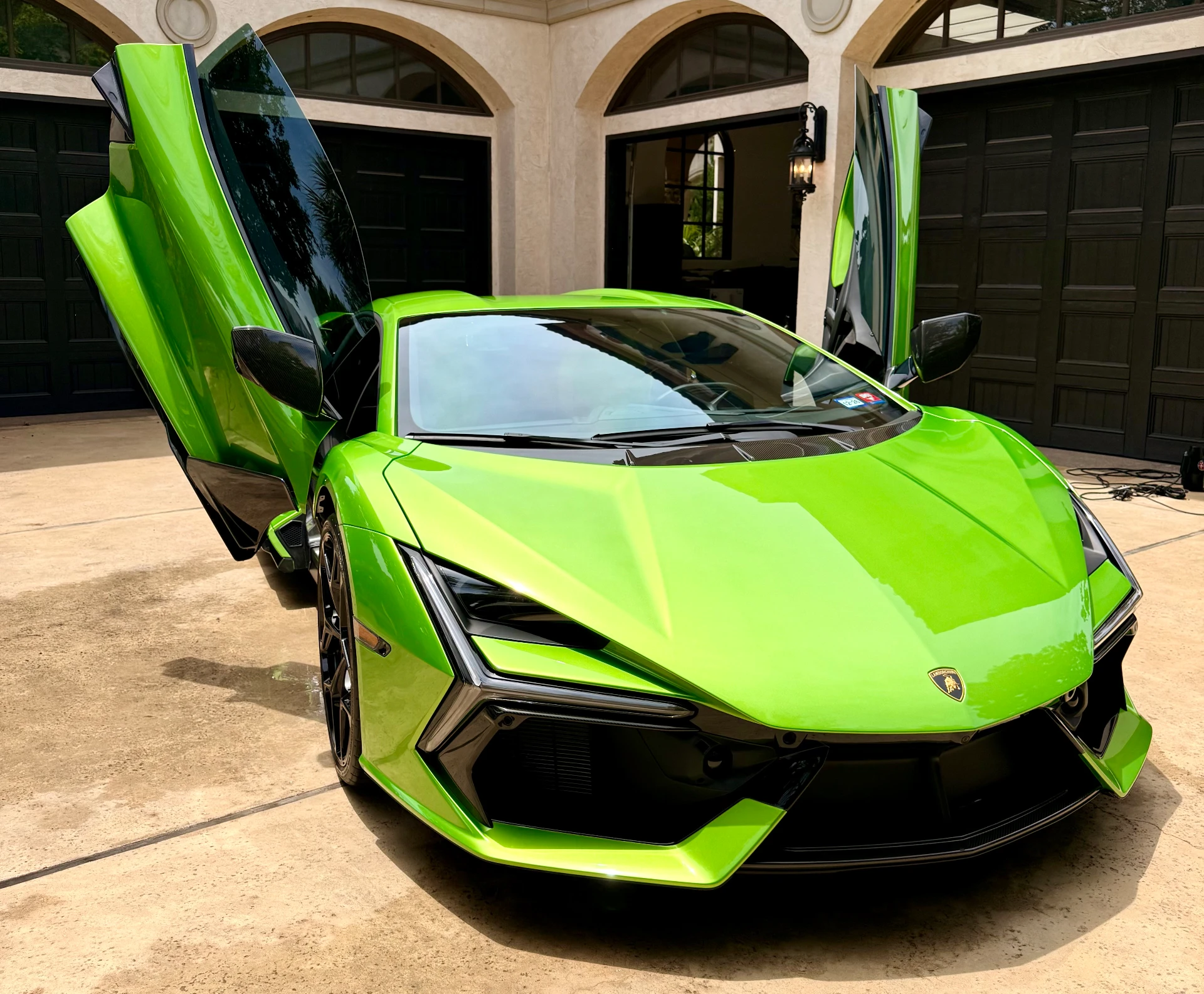
Car paint restoration brings dull, faded or swirled paint back to a deep, glossy finish by removing a very thin layer of damaged clear coat and then sealing what is left. It works when the clear coat is still intact. If it is cracking or peeling, no polish can fix it and the panel needs refinishing. For most faded cars in North Texas, the right answer is professional paint correction followed by a ceramic coating, and in Allen we discuss the right location for correction and coating in advance.
- Faded, hazy or swirled paint can usually be restored by machine polishing (paint correction) as long as the clear coat is not cracked, flaking or worn down to color.
- One-step correction is the right fit for light to moderate dullness. Heavier oxidation or deeper scratches call for two steps.
- Our 1-Step Correction starts at $599 and 2-Step Correction at $799. The final price depends on the vehicle and the paint’s condition.
- Restored paint needs protection right away. Ceramic coating is the longest-lasting option, and Raven’s GYEON options offer up to 3-year protection, up to 4–5 years with proper maintenance, or up to 10-year warranty coverage subject to manufacturer requirements.
- Mobile detailing is available in Allen, McKinney and nearby Collin County communities. Coating installation location and preparation/curing time are arranged separately.
What car paint restoration actually is
Modern cars have a layered finish: primer, a color coat, and a transparent clear coat on top. The clear coat carries the gloss and takes the abuse from sun, rain, bird droppings, road grime and automatic car washes. Over the years it gets covered in microscopic scratches and starts to oxidize, which scatters light instead of reflecting it. That is why old paint looks chalky, flat or cloudy, and why red, black and dark blue cars show it first.
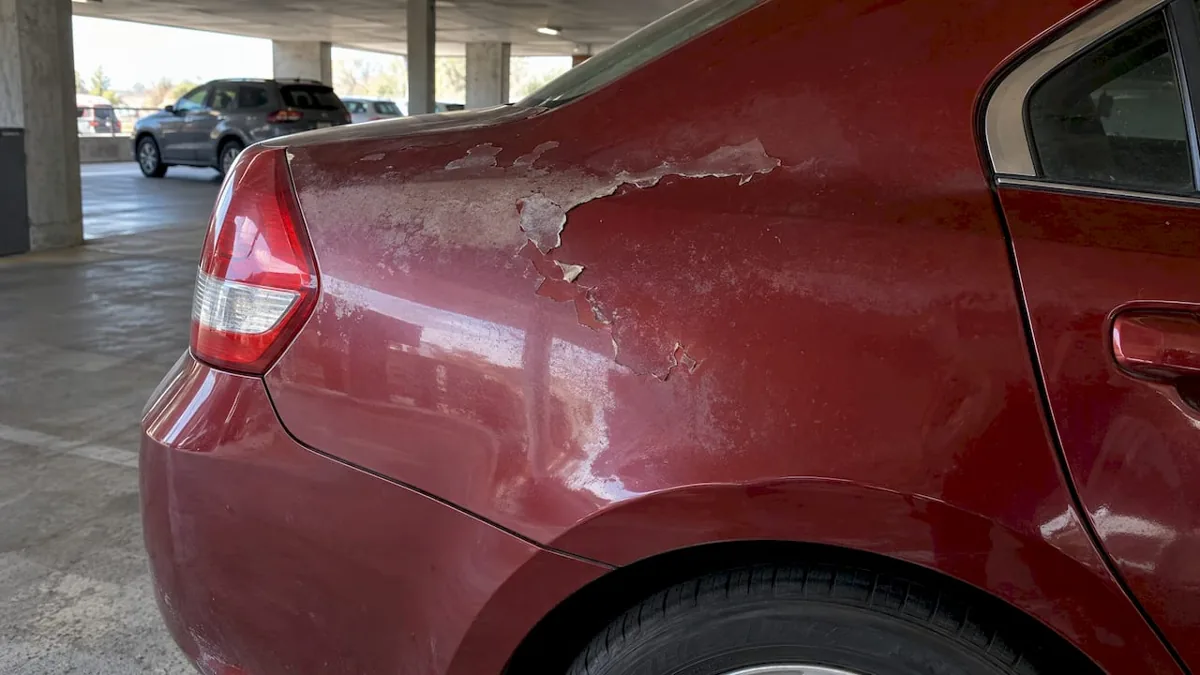
Restoration, in practice, means paint correction. A detailer washes and decontaminates the paint, then uses a machine polisher with a cutting compound and polishing pad to level the surface of the clear coat. Taking off a hair-thin layer removes the scratches and oxidized film together, and the paint reflects light cleanly again. A finishing polish refines the gloss. Then the surface is protected so it does not degrade again.
It is not repainting. Nothing is added to the paint. That is both the advantage (original paint, original finish) and the limit (you can only correct what is still there).
Faded paint or failed clear coat: how to tell
This is the question that decides everything. Surface fading and oxidation sit in the top of the clear coat, and they can be polished out. Clear coat failure means the layer itself has broken down.
Signs your paint is a restoration candidate:
- The paint looks dull, hazy or chalky but is smooth to the touch.
- Swirl marks and fine scratches show in direct sun.
- The color looks richer for a moment when the surface is wet or freshly wiped.
- Roof, hood and trunk lid look worse than the doors. These horizontal panels take the most sun, and in Texas that difference is often obvious.
Signs the clear coat has failed:
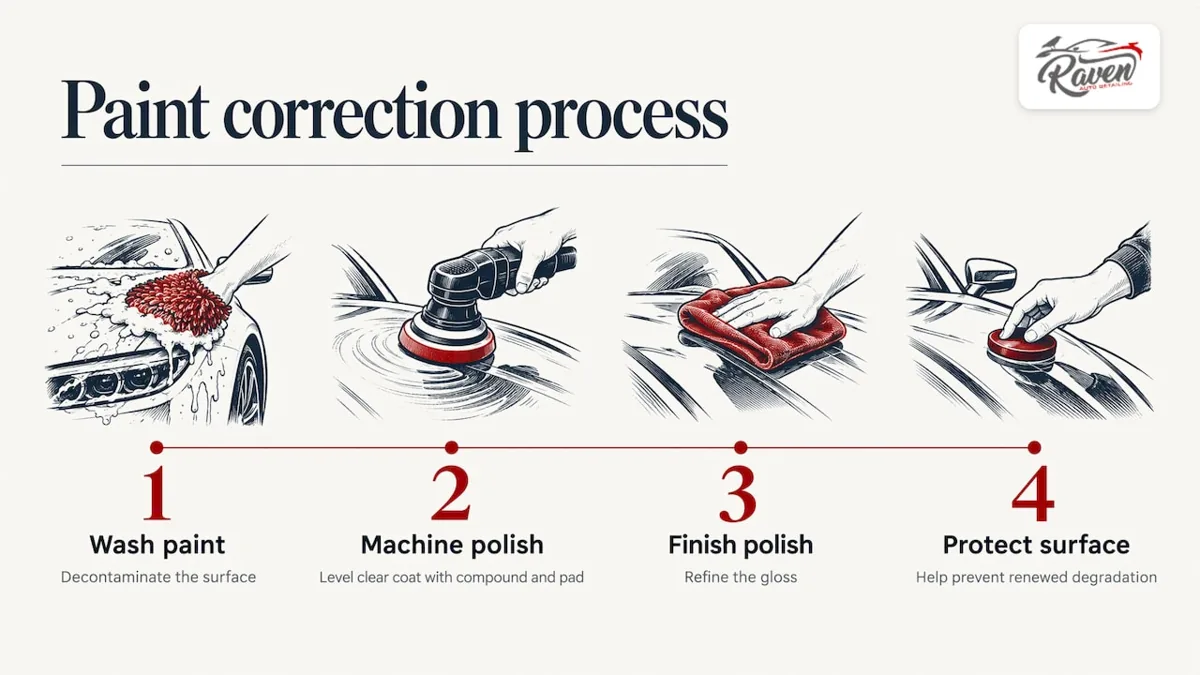
- White, cloudy or peeling patches, often starting at the roof edge or hood.
- A cracked, blistered or rough surface, like dried sunburned skin.
- Color that looks uneven or patchy after a wash.
- Bare, flat color with no gloss layer at all.
As Dallas Auto Paint and other body shops describe it, cracking, flaking or exposed pigment mean sanding and repainting, not polishing. If you see those signs, a body shop has to refinish that panel. Most of the faded cars we see in this area are simply oxidized and swirled, not failed, and that is the case where correction pays off.
A quick home check: wash and dry a small area, then look at it in bright, direct light. Feel the surface with your fingertips through a thin plastic sandwich bag. Rough or flaking is a warning sign. Smooth but dull is promising. The detailer’s own inspection, which measures the paint and test-polishes a small section, settles it.
How professionals restore faded paint, step by step
The process is the same in principle everywhere. The quality is in the prep, the pad and compound choice, and the patience.
1. Wash and decontaminate
The paint is washed, then treated to remove bonded contamination such as iron fallout, tar and road film. A clay-style treatment leaves the surface smooth. Skipping this step means polishing grit into the paint, which creates new scratches.
2. Inspect and test
The detailer looks at the paint under strong light and picks a small test section. The aim is to find the least aggressive combination of pad and polish that gets the result, because every pass removes a little clear coat and that material does not come back. Starting gentle is how professionals preserve the paint for future corrections.
3. Cut, then refine
One-step correction uses a single combination of polish and pad to remove light defects and restore gloss in one pass over the car. Two-step correction first uses a stronger cutting compound to remove heavier oxidation and deeper scratches, then follows with a finishing polish to bring back clarity. For oxidized paint, two stages generally restore more than a single pass or just waxing over dull paint.
4. Wipe down and inspect
Polishing oils can hide remaining defects, so the surface is wiped clean and checked again before protection goes on.
5. Protect
Freshly corrected paint is bare. It needs a UV-blocking layer immediately, which is why correction and ceramic coating are so often booked together.
You can see how this works on our one-step paint correction page, which explains what it fixes and what it costs.
One step or two: which does your car need
Paint condition — Typical fix — What to expect
Light haze, wash-induced swirls, dull but smooth — 1-Step Correction — Noticeably glossier, most light defects gone
Heavy oxidation, deeper scratches, years of neglect — 2-Step Correction — Strongest result clear coat allows
Peeling, cracking, exposed color — Refinishing at a body shop — Polishing cannot restore it
Cloudy headlights — Headlight restoration — Clear lenses, a better-looking front end
A helpful rule: if the whole car looks tired but feels smooth, start by assuming one step will bring back most of the gloss. If the hood and roof look chalky and washing makes no difference, expect to need two. We inspect before quoting, and if your paint falls outside what correction can fix, we tell you so you do not pay for a result polishing cannot deliver.
What professional restoration costs in Allen
We publish our prices, and you can see them all on our detailing prices and packages page:
- 1-Step Correction: from $599
- 2-Step Correction: from $799
- Basic Exterior: $149
- Premium Exterior: $249
- Gold Package: $229
- Diamond Package: $339
- Platinum Package: $489
- Headlight Restoration: see the headlight restoration page
- Ceramic coating: see the ceramic coating page
The “from” on correction is real. Price moves with vehicle size, how much paint there is to work on (a full-size truck is more than a coupe), and how damaged the finish is. A black SUV with years of swirls takes more time than a light-colored sedan with mild fading. That time is what you are paying for, because correction is slow, careful hand-guided machine work.
If your car’s main problem is dirt and dullness from neglect rather than damaged paint, a detailing package may be all you need. The exterior and Gold, Diamond and Platinum packages cover cleaning and protection without the correction stage. A full service car detailing visit is also the right start if the interior needs work too.
Can you restore faded paint yourself?
Partly, yes. Light oxidation on a car with healthy clear coat can be improved with a wash, decontamination, a dual-action polisher and compound, followed by protection. A dual-action polisher is the forgiving type, because its pad both spins and wobbles. People get into trouble in a few predictable ways:
- Going too aggressive too early, which removes clear coat that cannot be replaced.
- Working on edges and body lines, where paint is thinnest and most easily burned through.
- Polishing a car that has already been corrected several times, with no way of knowing how much clear coat is left.
- Stopping at a polish when heavier oxidation needs a compound, or the opposite, cutting too hard on a light problem.
- Forgetting to protect afterward, so the gloss fades again within weeks.
A mistake on a panel is permanent. If you value the paint, or the car is a daily driver you cannot take out of service for a weekend of polishing, having us do it removes the risk and the time. Our mobile service means we work in your driveway or at your office, so you are not dropping the car off or arranging a ride.
Protect the restored finish
Correction brings gloss back. Protection keeps it. Without it, the same sun and grime that dulled the paint start again on a thinner clear coat.
The common options differ mainly in how long they last:
- Wax: a few weeks to a couple of months.
- Synthetic sealant: a few months.
- Ceramic coating: a year or more, and far longer with professional-grade products.
- Paint protection film (PPF): a thick clear film that physically absorbs stone chips. It is a different tool aimed at impact damage rather than gloss and chemical resistance.
Ceramic coating is a liquid polymer that bonds to the clear coat and cures into a hard, slick, water-shedding layer. It resists UV, bird droppings, bug acids and road film, and it makes washing easier. For a daily driver in Texas facing sun and bugs, it is the practical choice.
We apply GYEON ceramic coatings. Our options offer up to 3-year protection, up to 4–5 years with proper maintenance, or up to 10-year warranty coverage subject to manufacturer requirements. The 5-year ceramic coating page explains what that tier means, costs and needs. If you drive a truck or large SUV, the ceramic coating for trucks and SUVs page covers what is different on bigger vehicles. Our ceramic coating in Allen page lists the local details.
Ceramic coating is best put on after correction, not before. The coating locks in whatever is underneath it, so applying it over swirled, oxidized paint seals the dullness in. Correct first, coat second.
When restoration is not enough
Polishing cannot fix:
- Clear coat that is peeling, flaking or cracked.
- Scratches deep enough to catch a fingernail, which have gone through the clear coat into color or primer. Correction can soften their look but not erase them.
- Rock chips down to metal, which need touch-up or body work.
- Previously polished paint that is already thin.
For those, a body shop repaint or panel refinishing is the path. That is a step for paint repair, not detailing, and it is the one case where we would say your car needs bodywork first. Once the panel is refinished and cured, correction and a ceramic coating are how you keep the new paint looking its best.
Headlights are a separate restoration. Yellowed, foggy plastic lenses ruin a freshly corrected front end and also reduce night visibility, so we offer headlight restoration as its own service.
Keeping restored paint glossy
A corrected, coated finish is easy to maintain, but washing technique matters more than anything else.
- Wash by hand with a pH-neutral shampoo and clean microfiber mitts, using two buckets if you can. Automatic brush washes put swirls right back.
- Dry with a clean microfiber towel to avoid water spots, which are common in North Texas because of the hard water.
- Use a maintenance topper. GYEON advises its WetCoat spray every two to three washes to refresh a coating’s water-shedding surface and take wear in its place.
- Wash bird droppings and bugs promptly. Acidic residue is harder on paint in summer heat.
- Park in shade or a garage when you can. UV is the main cause of fading in the first place.
That routine takes about the same time as washing a car you did not restore, and it keeps the finish from needing correction again.
Restoration at your home or office
For most owners in Allen, Plano, Frisco and McKinney, the hardest part of paint restoration is losing the car for a day or more. Our mobile service removes that. We bring the equipment to your home or workplace, and you keep your schedule. Details on service areas are on our Collin County mobile detailing page, and the McKinney page covers that city.
With over 300 five-star reviews, we have built our reputation on careful work. To book correction, a ceramic coating or a package, start at our pricing and packages page and book online.
FAQ
Can faded car paint be restored without repainting?
Yes, when the clear coat is still intact. Machine polishing removes the oxidized top layer and the fine scratches, bringing back gloss and depth. If the clear coat is peeling or cracked, that panel needs to be refinished instead.
How much does car paint restoration cost?
In Allen, our 1-Step Correction starts at $599 and our 2-Step Correction at $799. The final price depends on the vehicle’s size and the condition of the paint. Lighter jobs may only need a detailing package such as Basic Exterior at $149 or Premium Exterior at $249.
How long does restored paint stay glossy?
The correction itself is permanent, because the defects are removed. What fades is the protection on top. Wax lasts weeks, sealants a few months, and ceramic coating years. Raven’s GYEON options offer up to 3-year protection, up to 4–5 years with proper maintenance, or up to 10-year warranty coverage subject to manufacturer requirements. Regular hand washing is what keeps the gloss at its best.
Should I get a ceramic coating after paint correction?
Yes, that is the best order. Correction removes the dullness and scratches, and the coating locks in the result and shields the paint from UV, bird droppings and road film. Coating first would seal in the dull finish.
Do you come to my house?
Yes. We offer mobile detailing at your home or workplace in Allen and the surrounding Collin County area, so you do not need to drop the car off.
Sources
Recommended
Written with BabyLoveGrowth to write for search
Current Raven service choices
Raven pricing follows the selected vehicle category: Sedan / Coupe, Small SUV, or Large SUV / 3-Row SUV / Lifted Truck. Compare the current detailing packages. Ceramic pricing is universal across standard-sized vehicles: Essential from $799, Signature from $1,099 and Elite from $1,399, before tax. Paint correction is optional and priced separately; manufacturer preparation and warranty conditions apply. Oversized, lifted and specialty vehicles may require custom pricing. Coating installation location and curing time are confirmed individually; our garage space is preferred. Explore GYEON coating or request a quote.
Ready for a detail?
We come to you anywhere in Allen, McKinney, Frisco, Plano and nearby.