Paint Correction
One-Step Paint Correction: What It Fixes and What It Costs
November 19, 2026 · 12 min read
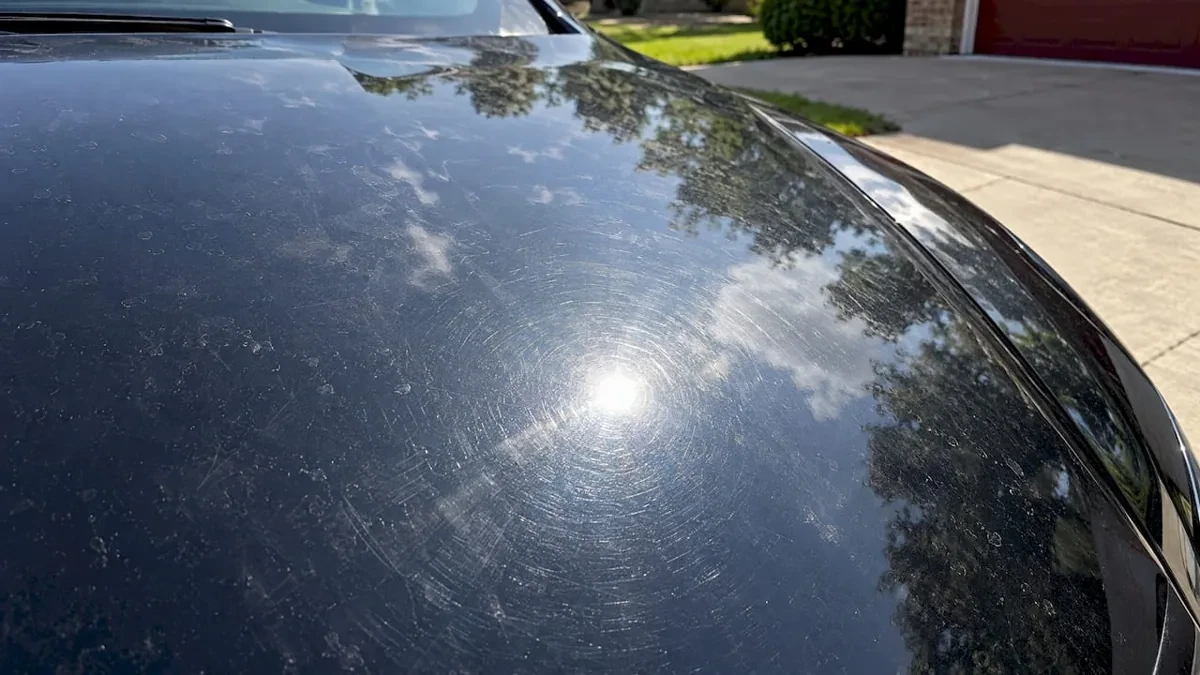
One-step paint correction explained: what a single stage polish removes, how long it takes, how it differs from two-step, and what it costs in Allen, TX.
One-step paint correction is a single machine-polishing stage: one polish and one pad, worked across every panel to remove light swirl marks, haze and fine wash scratches and bring the gloss back. It suits paint that looks dull and swirled but has no deep scratches. In Allen, TX, our 1-Step Correction starts at $599, and we bring it to your home or workplace.
This guide explains what happens in the process, what it can and cannot remove, how it differs from two-step correction, and how to tell which one your car needs.
- One-step (also called single-stage or one-stage) correction polishes the paint once, with one product and pad, to remove light swirls, haze and fine marring.
- It typically takes about 2 to 4 hours on a sedan and removes roughly 40 to 60% of light defects, according to one industry guide. Results vary with the paint and the polish.
- Two-step adds a first, more aggressive cutting stage for deeper defects, so it takes longer and costs more.
- Raven’s 1-Step Correction starts at $599 and 2-Step Correction at $799. Both are done at your location in Allen and nearby areas.
- A scratch your fingernail catches in, a chip or peeling clear coat is not a one-step job.
What one-step paint correction actually is
Your car’s paint has a color layer covered by a thin, transparent clear coat. Over time, automatic washes, dry towels, dust and sun leave thousands of tiny scratches in that clear coat. In sunlight they show up as spiderweb swirls, and they scatter light, so the paint looks flat instead of deep and glossy.
Paint correction fixes this by leveling the clear coat very slightly with a machine polisher, until the surface is smooth again and reflects light cleanly. It is different from waxing or sealing, which sit on top of the paint and can hide marks for a while but do not remove them.
In a one-step correction, the detailer picks a single polish and pad combination and uses it for the whole job. That one combination has to cut enough to level light defects and also finish fine enough to leave a clear shine. That is the “one step” and the reason for the other names. Single-stage, one-stage and 1-step all describe the same thing.
The tradeoff is built in. Because one product does both jobs, the process is gentler and faster than a multi-stage correction, but it has a ceiling. One industry guide puts the typical improvement at 40 to 60% of light defects such as swirl marks, water spots and light oxidation. Other detailers report higher numbers on lightly swirled paint. In practice, what you see depends on how deep the defects are and how hard the paint is.
What the process looks like, step by step
A proper one-step correction is more than a quick pass with a polisher. The sequence below is the standard order of work, and the order matters.
- Wash and decontaminate. The car is washed, then cleaned of bonded grit such as iron particles and tar. If this is skipped, the polisher drags that grit across the paint and adds new scratches.
- Inspect the paint. The detailer checks the paint under strong light to find the swirls, haze and scratches, and to judge how deep they are. This inspection decides whether one step is enough.
- Test a small spot. A small section is polished first with the intended polish and pad. If the result is right, the same combination is used on the rest of the car. If not, the plan changes before the whole car is touched.
- Polish panel by panel. Each panel is worked in overlapping passes, one small section at a time, so that every inch gets the same amount of work.
- Wipe down. Polishing oils are removed so you see the true finish rather than a temporary filled-in shine.
- Protect. Freshly corrected paint is bare. It needs a layer of protection, such as a sealant or a ceramic coating, to keep it glossy.
The inspection and the test spot are where experience matters. Every polishing pass removes a small amount of clear coat, so a careful detailer judges how much margin the paint has before choosing how aggressive to be. Auto Cleaned’s guide stresses that problems usually start when paint of unknown thickness, repainted panels or thin factory clear coat are polished without that check.
What one-step correction can and cannot fix
What it can reduce
- Swirl marks from washing and drying
- Light haze and early oxidation that make the paint look dull
- Fine marring, the faint scuffing left by towels, brushes and wipes
- Shallow surface scratches that you can see in direct light but cannot feel with a fingernail
What it cannot fix
- Rock chips and paint that is missing
- Scratches deep enough to catch your fingernail
- Peeling, cracking or failing clear coat, which needs refinishing, not polishing
- Etching from bird droppings or hard water that has bitten deeply into the clear coat. A one-step pass may soften it, but heavy etching usually needs a more aggressive first stage.
A simple test you can do yourself: run a fingernail gently across a scratch. If it does not catch, the scratch is shallow and a polish can usually reduce it. If it catches, it is deeper than a single finishing-level stage will level out.
One-step vs. two-step paint correction
Two-step (also called two-stage) correction splits the work in two. First, a more aggressive compound on a cutting pad removes deeper defects. That stage leaves a slight haze of its own, so a second, finer polish on a softer pad refines the surface to a high gloss.
— One-step — Two-step
Products — One polish, one pad — Cutting compound, then finishing polish
Best for — Light swirls, haze, fine marring — Moderate to heavy swirls, deeper scratches, etching
Typical defect removal — Roughly 40 to 60% of light defects — 70 to 90% of moderate to heavy defects
Typical time — About 2 to 4 hours on a sedan — Often 6 to 12 hours or more
Clear coat removed — Less — More
Raven price — From $599 — From $799
The percentages come from industry guides and are rough averages, not promises for any one car. They do show the pattern: two-step goes deeper, takes about a day, and removes more clear coat to get there.
That last point is the reason one-step is a smart choice and not just the cheaper one. Clear coat is finite, and you cannot put it back. On paint that is thin, repainted, or only lightly swirled, taking off more than you need gains nothing. The right amount of correction is the least that gets you the finish you want.
Which one does your car need?
Ask two questions: how bad is the paint, and what do you want it to look like afterward?
One-step is usually the right call when:
- The paint has light to moderate swirls and no deep scratches
- The car is a daily driver and you want a big, visible improvement rather than show-car perfection
- The paint is older, has been corrected before, or has been resprayed, and you want to be careful with the clear coat
- You are preparing for a protective layer and the paint is in decent shape to begin with
Two-step is usually the right call when:
- Swirls are heavy and visible even in shade
- There are deeper scratches or water-spot etching
- You want the best possible finish before a high-end ceramic coating
- The car is a showpiece and you want the deepest gloss possible
Color matters too. Dark paint shows every flaw, so black, dark blue and deep gray cars often benefit from more correction than white or silver ones, which hide light swirls well.
You do not have to guess. We look at the paint in person, tell you which stage fits, and quote that service. If one step is enough, you pay for one step.
One-step correction before a ceramic coating
Correction and coating work together. A ceramic coating bonds to the paint and holds whatever finish is underneath, flaws included, for years. That is why paint is corrected first and coated second. Coating swirled paint locks the swirls in under a clear, hard layer.
We apply GYEON ceramic coatings. Our options offer up to 3-year protection, up to 4–5 years with proper maintenance, or up to 10-year warranty coverage subject to manufacturer requirements. For a daily driver in good condition, a one-step correction followed by a coating is a common route to a glossy, protected finish without removing more paint than needed. If your paint is heavily swirled and you want the finish at its best, two-step before coating is the stronger prep. Our ceramic coating page for Allen explains the options, and the 5-year ceramic coating guide covers what that tier means, costs and needs.
In Texas, the sun is a reason to protect paint after correcting it. Long summers mean constant UV and heat on clear coat, and paint that has just been polished benefits from a coating or sealant right away.
How long does it take, and what does it cost?
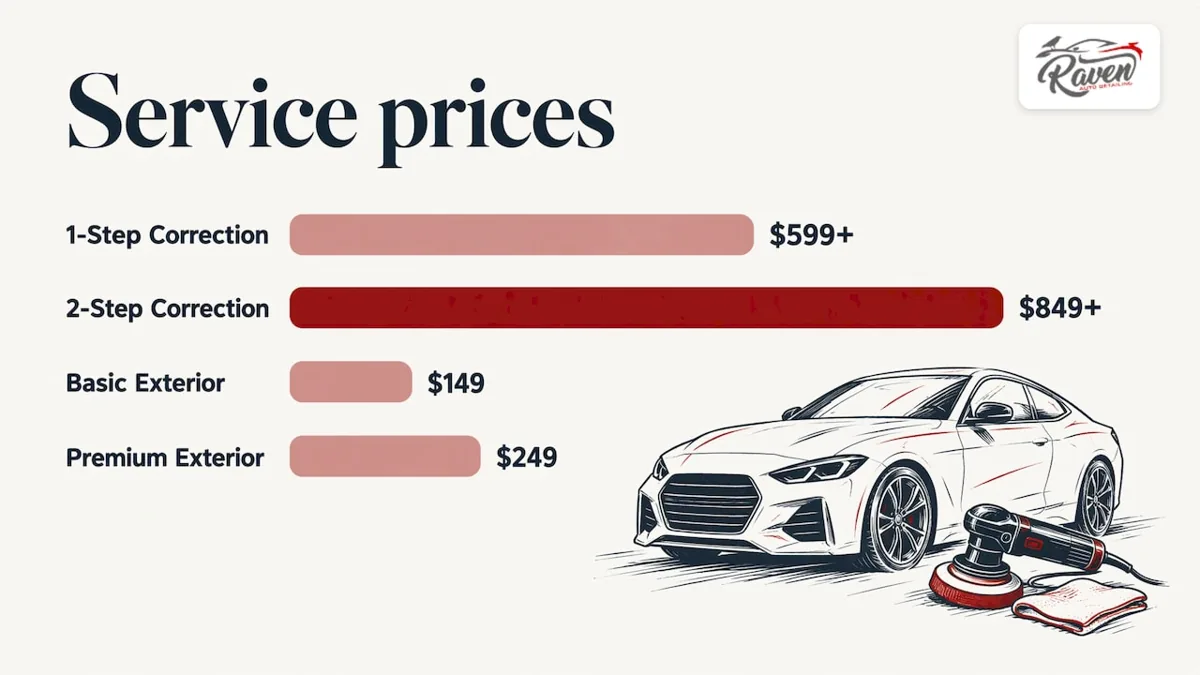
On a typical sedan, a one-step correction takes about 2 to 4 hours in most published guides. Larger vehicles, heavy paint and a careful inspection take longer, and two-step work commonly runs a full day or more.
Our prices are published, so you can plan before you book:
- 1-Step Correction: from $599
- 2-Step Correction: from $799
- Basic Exterior: $149
- Premium Exterior: $249
The “from” matters. Price depends on the vehicle’s size and the condition of the paint. Our full list, including interior and combination packages, is on the car detailing pricing page.
Why have it done at your home or office
Paint correction is a long job. At a shop, that means dropping the car off and arranging a ride. We are a mobile service, so the work happens where you already are, at your home or workplace in Allen and the surrounding area. For busy professionals this is the main appeal: the car is corrected while you work or stay at home.
Our detailing has earned more than 300 five-star reviews from local customers. If you are in McKinney, our mobile detailing page for McKinney covers that area.
Getting the best result from a one-step correction
- Keep the paint clean afterward. Hand washing with clean mitts, rather than automatic brush washes, keeps new swirls from forming.
- Protect it quickly. Corrected paint is bare until a sealant or coating is applied. We can apply a GYEON ceramic coating as part of the visit.
- Pair it with the rest of the car. If your headlights have yellowed, our headlight restoration can match the clarity of the paint. For an interior that needs the same attention, see our full service car detailing options.
- Be realistic about the target. One-step is built for a clear, glossy improvement. If you want every last swirl gone, say so during the inspection so the plan can include a second stage.
Book a one-step correction in Allen
If your paint looks dull or swirled and you want it to shine again, our 1-Step Correction starts at $599, done at your home or workplace with online booking. Look at the pricing and packages, choose the service that fits your paint, and book. If you are unsure between one and two steps, tell us about your car and what you want from it when you book.
FAQ
What is a one-step paint correction?
It is a single machine-polishing stage that uses one polish and one pad to remove light swirls, haze and fine scratches. It restores gloss without the extra clear coat removal of a multi-stage job. Single-stage and one-stage mean the same thing.
How much does a one-step paint correction cost?
At Raven Auto Detailing, 1-Step Correction starts at $599, and 2-Step Correction starts at $799. The final price depends on the size of the vehicle and the condition of the paint. Current prices are on our pricing page.
How long does a one-step paint correction take?
On a typical sedan it takes about 2 to 4 hours in most industry guides. A larger vehicle or heavily swirled paint takes longer. Two-step correction usually takes much longer, often a full day.
What is the difference between one-step and two-step paint correction?
One-step uses a single polish and pad to cut and refine at the same time, which suits light defects. Two-step starts with a cutting compound for deeper defects, then refines with a finishing polish. It removes more but takes longer and costs more.
Is one-step correction enough before a ceramic coating?
Often yes, when the paint has only light swirls and you want a strong improvement. For heavily swirled or scratched paint, two-step gives a better base for the coating. We assess the paint and recommend the stage that fits.
Sources
Recommended
Made with BabyLoveGrowth to get cited by AI
Current Raven service choices
Raven pricing follows the selected vehicle category: Sedan / Coupe, Small SUV, or Large SUV / 3-Row SUV / Lifted Truck. Compare the current detailing packages. Ceramic pricing is universal across standard-sized vehicles: Essential from $799, Signature from $1,099 and Elite from $1,399, before tax. Paint correction is optional and priced separately; manufacturer preparation and warranty conditions apply. Oversized, lifted and specialty vehicles may require custom pricing. Coating installation location and curing time are confirmed individually; our garage space is preferred. Explore GYEON coating or request a quote.
Ready for a detail?
We come to you anywhere in Allen, McKinney, Frisco, Plano and nearby.